

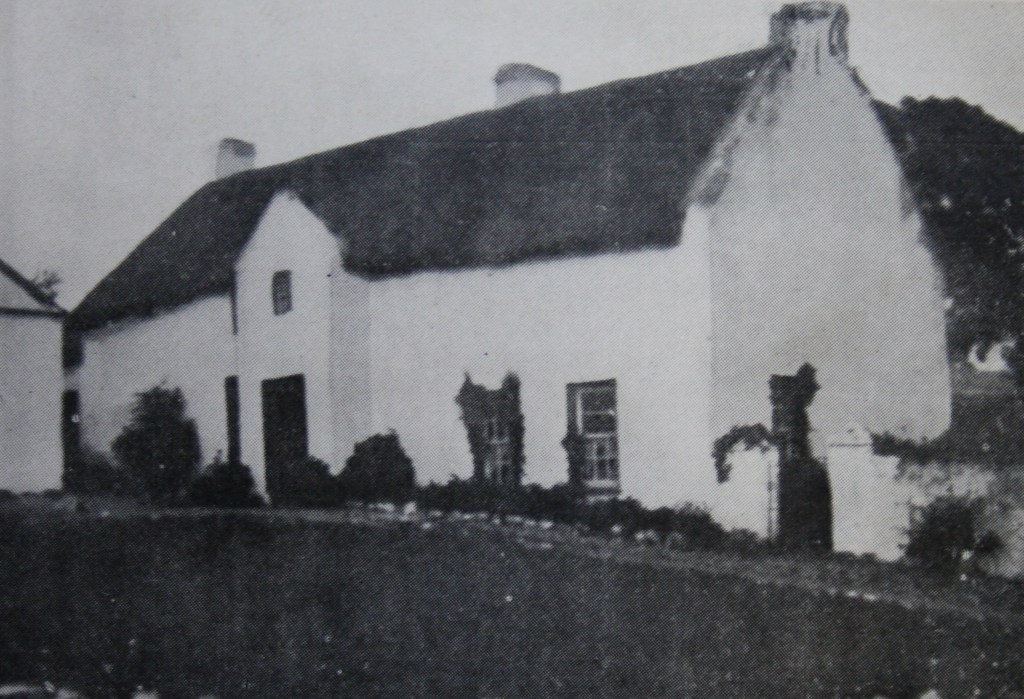
In March and September of 1711, in Carrickfergus, County Antrim, Ireland’s last witch trials took place, those of the ‘Islandmagee Witches’. The events leading to the trial began when in February 1711, the elderly widow of Presbyterian minister, Ann Haltridge died suddenly after suffering months of demonic supernatural attack in her home, Knowehead House, in Islandmagee. Islandmagee is an eight-mile long peninsula that lies on the east coast of County Antrim, and in the early eighteenth century it contained around 300 Presbyterians of Scots descent.
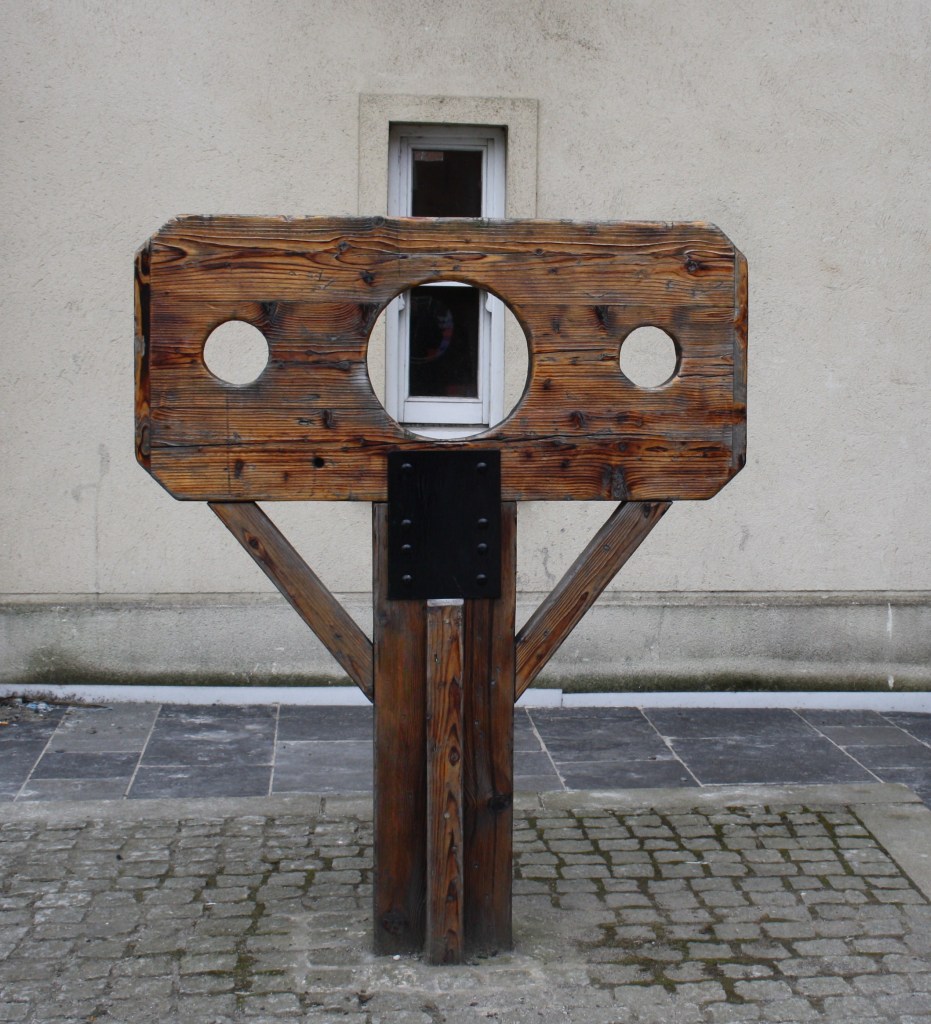
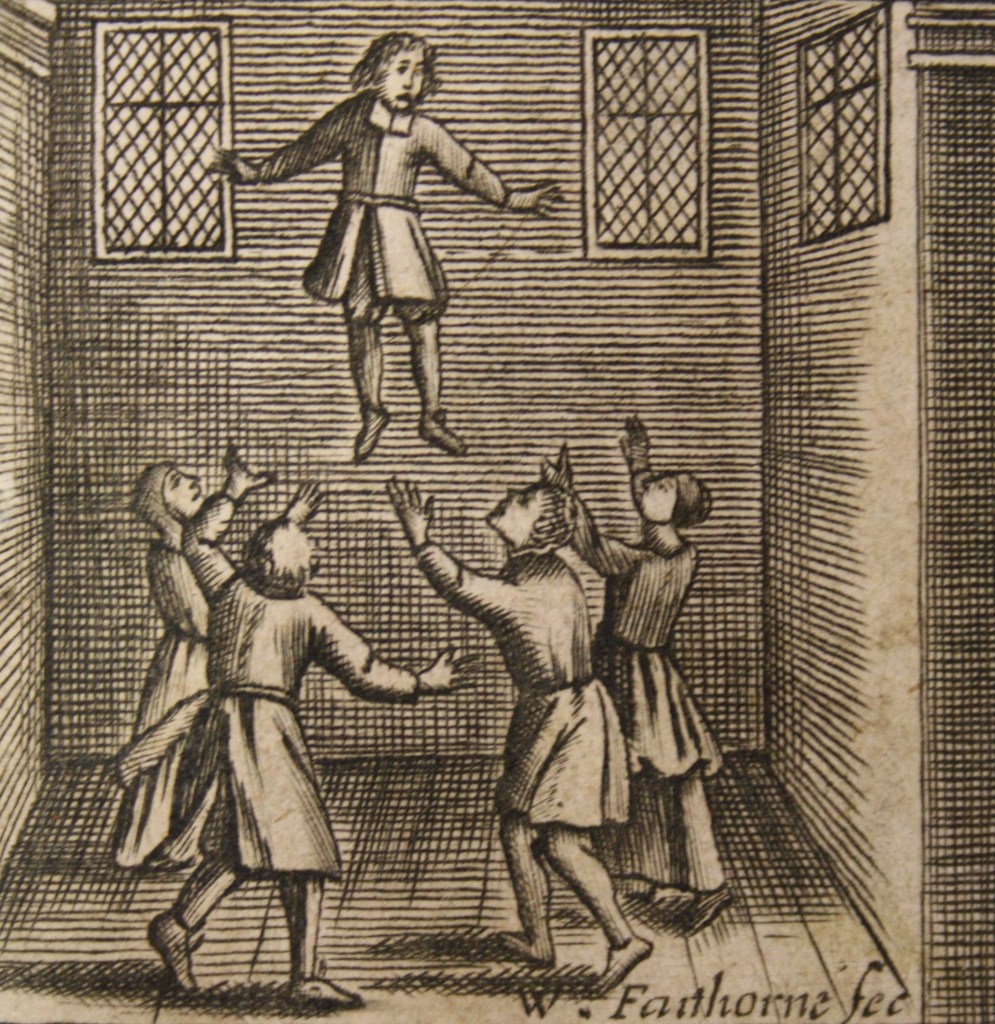
After Ann’s funeral, her niece, eighteen-year old, educated gentlewoman, Mary Dunbar, arrived at Knowehead House. Almost immediately Mary began to display the classic symptoms of demonic possession: from convulsions, to vomiting household objects, to levitation. During the month of March 1711, Dunbar accused eight Presbyterian women from Islandmagee and the surrounding areas of using witchcraft to attack her in spectral or spirit form and to summon demons to possess her body. The women were eventually tried on 31 March 1711 at the Spring Session of Carrickfergus County Assize Court. Despite pleading not guilty, they were convicted under the 1586 Irish Witchcraft Act and sentenced to one year’s imprisonment and four stints in the pillory.
Unlike most demoniacs (demonically possessed persons), the incarceration of the convicted witches did not improve Dunbar’s health. Dunbar now claimed that William Sellor, husband and father to two of the convicted women, had begun bewitching her. William was convicted of witchcraft at the Summer Assizes in September 1711. Mary Dunbar however had died a few weeks earlier, just after the first trial, turning William’s original offence into a capital crime for which he was probably executed: he was thus one of a possible two people executed in Ireland under a witchcraft Act.
For a detailed examination of the trial and Irish witchcraft, see: Dr Andrew Sneddon’s book; Possessed By the Devil: The History Of The Islandmagee Witch Trials 1711 (expanded 2nd edition, History Press, 2024):

FURTHER READING
Victoria McCollum, Andrew Sneddon, Frank Ferguson, Stephen Butler, Alice McCullough, “Roundtable: the Islandmagee 1711 Creative and Digital Project”, Estudios Irelandeses, Special Edition: Enlightenment Legacies, 18:2 (2023): 112-18
Andrew Sneddon, Representing Magic in Modern Ireland: Belief, History, and Culture (Cambridge University Press, 2022).
– Witchcraft and Magic in Ireland (Palgrave Macmillan, 2015).
-“Creative” Microhistories, Difficult Heritage, And Dark Public History’, Preternature: Critical and Historical Studies on the Preternatural, 11:1 (2022): 109-30.
-‘The Supernatural, Magic, and Religion’ in, Gladys Ganiel, Andrew R. Holmes (eds), The Oxford Handbook of Religion in Modern Ireland (Oxford University Press, 2024): 72-88.
-‘Witchcraft Belief, Representation and Memory in Modern Ireland’, Cultural and Social History, 16:3 (2019): 251-70.
BLOGS
Victoria McCollum, Andrew Sneddon, ‘How we told the story of Ireland’s last ever witch trial’, RTÉ Brainstorm, 2023.
Andrew Sneddon, ‘Toil and Trouble: Ireland’s Last Witch Trial’, Social History Society, Research Exchange, 2019.
PODCASTS
Andrew Sneddon, ‘Ireland’s Last Witch Trials with Dr Andrew Sneddon‘, Haunted History Chronicles Podcast, 2024
– ‘Witches of Ireland‘, Witches of Scotland Podcast, episode 67, 2023.
– ‘Irish Witch Trials’, Thou Shalt Not Suffer: The Witch Trial Podcast, September 2023.
RECORDED TALKS
FEATURED IMAGES



© Copyright Victoria McCollum and Andrew Sneddon 2025
 Witches of Islandmagee